

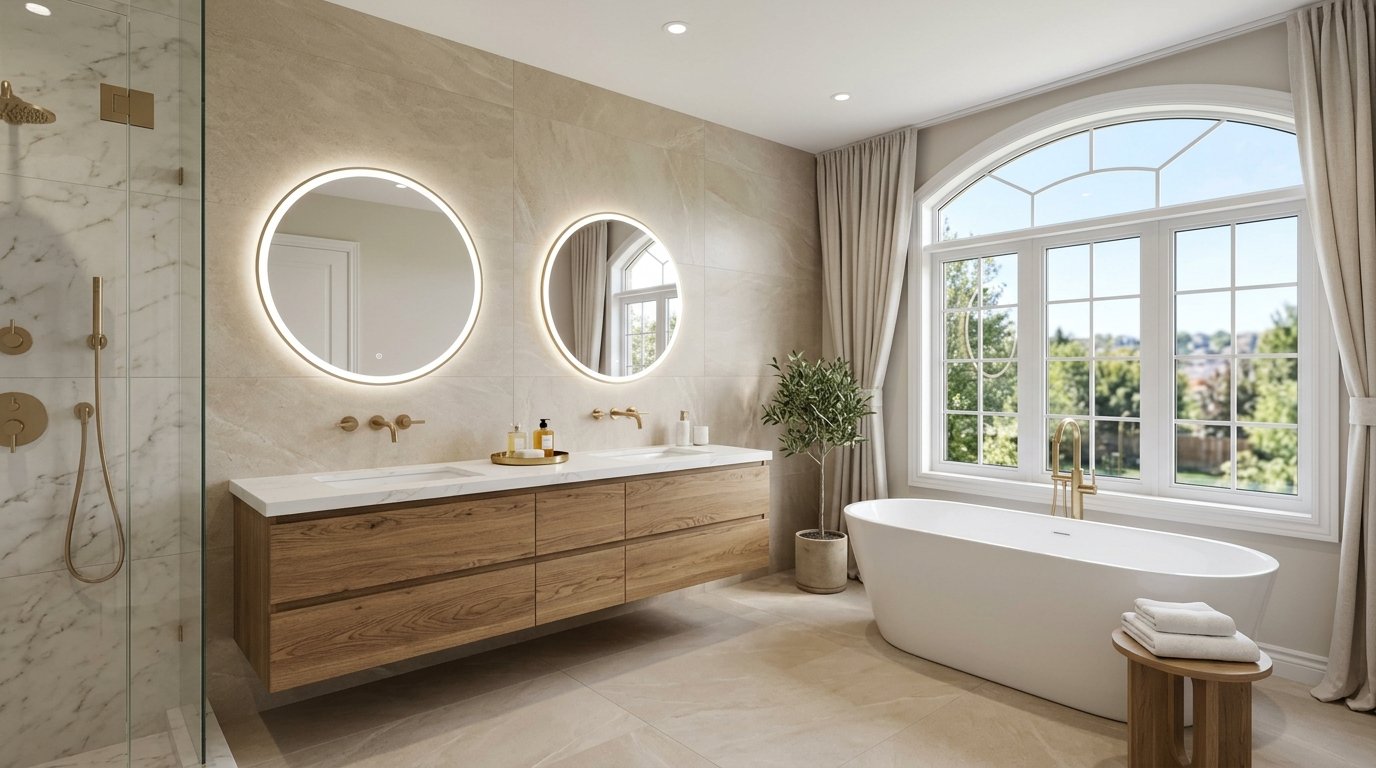
If you’re planning a bathroom renovation in Vaughan this year, two questions matter most before you swing a hammer: what will it actually cost in 2026, and do you need a permit? Get either one wrong and you risk blown budgets, failed inspections, or having to tear out finished work. At Country Renovations Inc., we’ve been renovating bathrooms across Toronto and the GTA since 2014, and this guide lays out the real numbers, the permit rules, and the Ontario Building Code requirements that apply to your project — no guesswork, no filler. Whether you want a simple refresh or a full gut, this bathroom renovation in Vaughan guide gives you the numbers to plan with confidence.
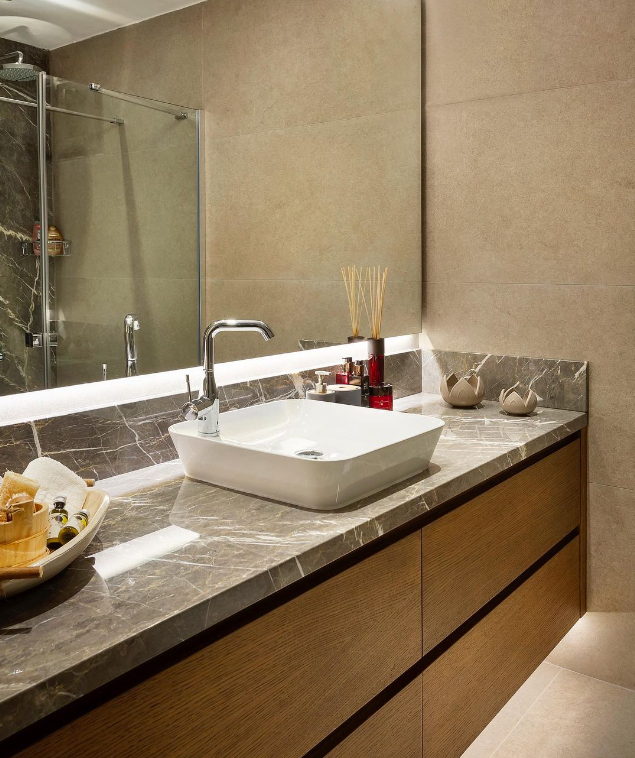
What a Bathroom Renovation Costs in Vaughan in 2026
Bathroom renovation in Vaughan pricing across the GTA has settled into a fairly consistent range for 2026, though where your project lands depends heavily on the size of the space, the materials you choose, and whether you move any plumbing.
For a standard full bathroom renovation, the market is clear.
Bathroom renovation costs in Toronto for 2026 range from roughly $8,500 to $70,000+, depending on the scope of the project. The average for a standard full-bathroom renovation lands between $16,000 and $24,000 — covering demo, waterproofing, tile, fixtures, plumbing, and finishing.
Another current GTA cost guide puts
the overall average cost of a bathroom renovation in Toronto in 2026 around $17,000, though most full-scope renovations fall between $12,000 and $30,000 CAD.
Here’s how the cost of a bathroom renovation in Vaughan typically breaks out by bathroom type across the surrounding GTA:
- Powder room / half bath: These are the most affordable because plumbing work is limited. Updates usually involve a new vanity, mirror, lighting, paint, and flooring, and limited plumbing keeps costs manageable.
-
Standard 3-piece or 4-piece bathroom: This is the most common renovation in GTA homes.
A basic bathroom renovation typically ranges from $15,000 to $22,000. These projects usually keep the existing layout and focus on replacing fixtures, tile, flooring, lighting, and vanities. -
Mid-range bathroom:
A mid-range bathroom renovation typically ranges from $22,000 to $30,000 and may include upgraded tile, custom showers, new plumbing fixtures, and higher quality finishes. -
Primary ensuite / luxury bathroom:
Large ensuite or luxury bathroom renovations can range from $30,000 to $45,000 or more depending on custom features, layout changes, and premium materials.
Cost per square foot
If you prefer to budget by footprint, the bathroom is one of the most expensive rooms in the house to renovate per square foot because of the concentration of plumbing, waterproofing, tile, and electrical in a small area.
Toronto bathroom renovations typically cost between $100 and $200 per square foot, depending on the quality of materials and complexity of work involved.
Higher-end estimates run steeper still, with some 2026 guides placing premium work in the $200–$600 per square foot range once custom showers, heated floors, and high-end finishes enter the picture.
Where your money actually goes
Understanding the line items helps you spot a lowball bid before it becomes an expensive problem mid-project. A useful rule of thumb:
labour typically accounts for 40–60% of your total bathroom renovation budget. The remaining 40–60% covers materials, fixtures, and permits.
The major cost components in a Vaughan bathroom reno include:
- Demolition and disposal:
Tearing out old tile, fixtures, drywall, and flooring is the necessary first step. Demolition in a standard Toronto bathroom runs between $800 and $1,500.
This is also when we inspect the subfloor and walls for water damage or mould, which is common in older homes built in the 1980s and 90s across Vaughan and the GTA. - Plumbing: This is one of the biggest cost drivers.
Relocating or upgrading plumbing is one of the biggest cost drivers. Keeping fixtures in the same location saves money; moving a toilet or shower requires a licensed plumber and adds $2,000 – $3,500.
If your layout changes are extensive, professional plumbing services become a core part of the budget rather than an afterthought. - Tile and waterproofing: Tile labour alone is a meaningful expense.
Tile installation labour runs $4 to $15 per square foot in 2026, with most jobs landing between $7 and $10 per sq ft for standard ceramic or porcelain on a flat floor.
Large-format tile, natural stone, and intricate patterns push both material and installation costs higher — something our flooring and tiling crews factor into every quote. - Fixtures, vanities, and lighting:
Higher-end vanities, lighting, faucets, and plumbing fixtures can raise the final cost depending on the selections homeowners make.
Why 2026 pricing is what it is
Material and labour costs have climbed steadily, and 2026 reflects that.
Skilled trades in Toronto remain in high demand, and material costs have risen steadily. Compared to 2024 estimates, expect pricing to be approximately 5–8% higher across most renovation categories.
Construction material costs nationally remain elevated; the
producer price index for construction materials hit 354.9 in March 2026, a new all-time high, up 6.0% year over year.
Skilled labour scarcity continues to put upward pressure on rates, which is why bids that come in dramatically below the ranges above usually signal corners being cut on prep, waterproofing, or permits.
Do You Need a Permit for a Bathroom Renovation in Vaughan?
This is where many Vaughan homeowners get tripped up. The City of Vaughan takes building safety seriously, and the consequences of skipping a required permit are real. As one local 2025 permit guide warns,
skipping permits can lead to costly delays, fines, or even having to tear out finished work.
When a permit IS required
You must obtain a building permit for any bathroom renovation in Vaughan that involves structural, plumbing, or electrical changes. Specifically, a permit is required when you are
moving or adding plumbing fixtures (toilet, shower, sink); relocating or adding electrical circuits, pot lights, exhaust fans, or heated floors; changing the layout (removing or adding walls); installing a new window or enlarging an existing one; doing any work in a basement below grade; or converting a powder room to a full bath.
The City’s own Building Standards Department confirms the breadth of what’s covered.
The Building Standards Department issues permits for the construction, renovation, and demolition of buildings. It also issues permits for the installation, alteration, extension and/or material alterations of on-site sewage systems, plumbing systems, early warning and fire suppression systems, and mechanical systems such as process exhaust, heating, ventilation, and air conditioning (HVAC).
When a permit is NOT required
The good news for budget-conscious homeowners: a cosmetic refresh that keeps everything in place generally doesn’t trigger a permit.
In most cases, a cosmetic refresh — new tile, vanity, and fixtures in the same location — does not require a permit.
Purely cosmetic updates that are exempt include
replacing a faucet or towel bars in the same location, and installing a new vanity or mirror with no plumbing or electrical changes.
The practical takeaway: if you’re swapping finishes without moving anything behind the walls or under the floor, you’re likely permit-free. The moment you relocate a drain, add a circuit, or knock out a wall, you’re in permit territory.
Vaughan permit fees and the application process
Budget for the permit itself as part of your overall project cost. For a full bathroom renovation,
total permit fees typically range from $800 to $2,000.
Vaughan updated its building permit fee structure under
By-law 051-2026, effective February 24, 2026,
so always confirm current figures against the City’s published fee schedule before you apply.
The application runs through the City’s online system. You’ll typically
submit plans through Vaughan’s e-Permitting portal, including a floor plan (existing and proposed), a plumbing isometric drawing, an electrical layout, and a cross-section for below-grade bathrooms.
Before applying, the City advises that you
make sure the proposal complies with the City of Vaughan Zoning By-law 1-88,
and questions can be directed to the
Building Standards department at 905-832-8510.
On timelines, plan ahead.
Minor renovations typically take 5–10 business days; major changes such as a basement bathroom or addition run 15–20 business days.
Once issued, the permit must be posted and visible on-site during construction, and you’ll need inspections at
the rough-in stage (plumbing and electrical before drywall) and a final inspection before occupancy.
A practical warning for condo owners in Vaughan, North York, or elsewhere in the GTA: get
condo board approval first, before the city permit, and be ready to submit contractor insurance ($2M liability plus WSIB).
If you’re adding a basement bathroom, an engineer’s review of any drain or vent changes can
add an extra $500 to $1,500.
The cost of ignoring the rules is steep. Vaughan can levy a fine of
up to $50,000 for a first offense,
and unpermitted work can lead to
a denied insurance claim if damage occurs and forced removal of the work.
It will also stall a future sale, since buyers increasingly demand a clean permit history.
Ontario Building Code Requirements You Can’t Skip
Even a modest bathroom reno must meet the Ontario Building Code (OBC) and the Ontario Electrical Safety Code. These aren’t optional extras — they’re what your inspector checks and what protects your home for the long term. Here are the requirements that come up most often in Vaughan bathrooms.
Ventilation and exhaust fans
Moisture control is non-negotiable.
The OBC largely adopts the National Building Code’s ventilation provisions but includes additional requirements specific to Ontario. Under the OBC, bathrooms in new construction must have either a mechanical exhaust fan or an operable window for ventilation.
In practice, relying on a window alone is a poor choice in Ontario winters, which is why we install proper fans on virtually every project.
Sizing matters.
For nearly every standard small bathroom under 100 square feet, the rule is simple: your fan must move at least 1 CFM for every square foot of floor space. A standard 5′ x 8′ bathroom (40 square feet) needs a 40 CFM fan minimum.
In reality,
most quality fans are rated at 50 CFM, which is usually sufficient for these smaller spaces, but if you have an oversized shower or jetted tub, the requirements jump dramatically.
Ducting is where a lot of installs quietly fail. The OBC limits how the exhaust is run:
the length of the ductwork cannot exceed 9m and the number of elbows needs to be less than 4.
The duct also has to vent to the exterior — not into an attic or eave — to avoid trapping moisture and breeding mould.
Electrical safety: GFCI protection
Water and electricity demand strict separation, and the code is specific.
A GFCI should be installed near the sink, and at least one GFCI-protected outlet is required.
For heated floors — an increasingly popular upgrade in Vaughan ensuites —
a Class A (5 mA) ground fault circuit interrupter (GFCI) is required for each circuit.
Any recessed lighting in a shower area must be IC- and damp-rated. Because these rules carry real safety stakes and require ESA sign-off, this work belongs with licensed electrical services rather than a handyman.
Plumbing standards
The OBC and plumbing code govern drains, vents, and supply lines. As a baseline,
an S-trap cannot be used, the vent must connect above the flood rim, and the toilet must be provided with a shut-off valve.
For supply piping,
half-inch pipe is suitable for most fixtures except a water closet with a direct flush valve.
These details are exactly what a rough-in inspection checks before drywall goes up — and getting them wrong means opening the wall back up.
Basement and below-grade bathrooms
Adding a bathroom to a Vaughan basement carries extra requirements, especially if it’s part of a secondary suite.
The Ontario Building Code requires a minimum ceiling height of 1.95 metres (6 feet 5 inches) for secondary suites, with 1.9 metres (6 feet 3 inches) allowed under beams and ducts.
If your ceiling is too low, you may need underpinning or bench footing before the space can be finished legally — a major cost factor worth confirming before you commit. Egress windows are also required for legal occupancy in basement living spaces. If a basement bathroom is part of a larger project, it pairs naturally with a full basement renovation handled under one permit and one crew.
How Long Does a Bathroom Renovation Take?
Timelines depend on scope and whether a permit and inspections are involved. For most projects,
most bathroom renovations in Toronto take 3–6 weeks from start to finish, depending on scope and permit requirements.
A rough sequence looks like this:
- Week 1: Permit confirmation, demolition, and the waterproofing inspection.
- Weeks 2–3: Plumbing and electrical rough-in, rough-in inspection, then drywall and waterproofing membrane.
- Weeks 3–5: Tile setting, fixture and vanity installation, and finishing.
- Final week: Final inspection, touch-ups, and walkthrough.
Build permit timelines into your schedule from day one. Since minor renos can take up to 10 business days for permit approval and major work up to 20, the permit process can add two to four weeks before demolition even begins. A contractor who pulls permits routinely — as we do across Vaughan, Markham, and Richmond Hill — can keep this moving without surprises.
Is a Bathroom Renovation Worth It in Vaughan?
For most homeowners, a well-planned bathroom renovation in Vaughan is a worthwhile investment that improves daily comfort and supports resale value.
For most homeowners, yes. Bathroom renovations consistently rank among the highest-return home improvements in the GTA. According to figures cited by industry sources,
the Appraisal Institute of Canada indicates a mid-range bathroom renovation in Ontario typically returns 75–85% of its cost at resale.
Beyond the numbers,
an updated bathroom — especially a primary ensuite — is one of the most influential factors for buyers, and homes with renovated bathrooms tend to sell faster and command higher offers.
That said, return depends on doing the work properly and to code. A bathroom with hidden moisture problems, a failed waterproofing layer, or unpermitted plumbing becomes a liability the moment a home inspector or buyer’s agent takes a closer look. This is why we treat waterproofing and code compliance as the foundation of every project, not an upsell.
Practical Advice to Control Your Budget
A few decisions move the needle more than any others when budgeting a Vaughan bathroom renovation:
- Keep fixtures in place if you can. Since relocating a toilet or shower can add $2,000–$3,500 in plumbing alone, preserving your existing layout is the single most effective way to save money without compromising on finishes.
- Decide on tile early. Tile is both a material and a labour cost, and complex layouts or large-format stone drive both up. Settling your tile selection before demolition avoids mid-project change orders.
- Budget a contingency. Older Vaughan homes frequently hide water damage or outdated wiring behind the walls. Setting aside 10–15% of your budget for the unexpected keeps a surprise from derailing the project.
- Bundle related work. If you’re already opening walls, it’s often more cost-effective to address adjacent projects at the same time — whether that’s a kitchen renovation sharing a plumbing wall or broader Toronto renovation services under a single permit and crew.
- Hire licensed, insured trades. A bid that skips permits or uses unlicensed labour isn’t a bargain — it’s a deferred cost that surfaces at inspection or resale.
Frequently Asked Questions
Do I need a permit to renovate my bathroom in Vaughan?
It depends on the scope. A cosmetic refresh that keeps tile, vanity, and fixtures in the same location generally doesn’t require a permit. However, you’ll need one if you move or add plumbing fixtures, add or relocate electrical circuits or an exhaust fan, change the layout, add a window, convert a powder room to a full bath, or do any work in a below-grade basement.
How much does a bathroom renovation cost in Vaughan in 2026?
A standard full bathroom renovation typically runs between $16,000 and $24,000, with the GTA average around $17,000. Powder rooms cost less, while mid-range bathrooms land around $22,000–$30,000 and luxury ensuites can reach $30,000–$45,000 or more depending on finishes and layout changes. Expect 2026 pricing to be roughly 5–8% higher than 2024 due to rising material and labour costs.
How much are Vaughan permit fees for a bathroom renovation?
Total permit fees for a full bathroom renovation typically range from $800 to $2,000. Vaughan updated its fee structure under By-law 051-2026, effective February 24, 2026, so confirm current figures on the City’s fee schedule before applying. A basement bathroom may also require an engineer’s review of drain or vent changes, adding $500 to $1,500.
How long does the permit process take in Vaughan?
Minor renovations are usually approved within 5–10 business days, while major changes such as a basement bathroom or addition take 15–20 business days. Plan for this on top of the 3–6 week construction timeline, and remember you’ll need rough-in and final inspections before the project is complete.
Does a bathroom in Vaughan legally require an exhaust fan?
Under the Ontario Building Code, a bathroom must have either a mechanical exhaust fan or an operable window. In Ontario’s climate, a fan is strongly recommended — and effectively necessary — for moisture control. The fan must move at least 1 CFM per square foot of floor area (a 50 CFM fan suits most small bathrooms), with ductwork no longer than 9 metres, fewer than four elbows, and venting to the exterior.
Will a bathroom renovation increase my home’s value?
Yes. Bathroom renovations are among the highest-ROI home improvements in the GTA, with a mid-range renovation typically returning 75–85% of its cost at resale. An updated bathroom, particularly a primary ensuite, also helps homes sell faster and attract stronger offers — provided the work is properly permitted and built to code.
Get Your Vaughan Bathroom Renovation Done Right
A successful bathroom renovation comes down to three things: an accurate budget grounded in current 2026 pricing, the right permits pulled before work begins, and full compliance with the Ontario Building Code on ventilation, electrical, plumbing, and waterproofing. Cut corners on any of them and the savings evaporate at inspection or resale.
Since 2014, Country Renovations Inc. has delivered code-compliant, fully permitted bathroom renovations for homeowners across Toronto, Scarborough, Markham, Richmond Hill, Vaughan, Mississauga, Brampton, Oakville, North York, and Etobicoke. We handle everything — design, permits, licensed trades, and inspections — so you get a finished bathroom that’s built to last and ready to add value to your home.
Contact Country Renovations for a free estimate and a clear, no-surprises plan for your Vaughan bathroom project. Reach out for your free, detailed quote and let’s get started.