

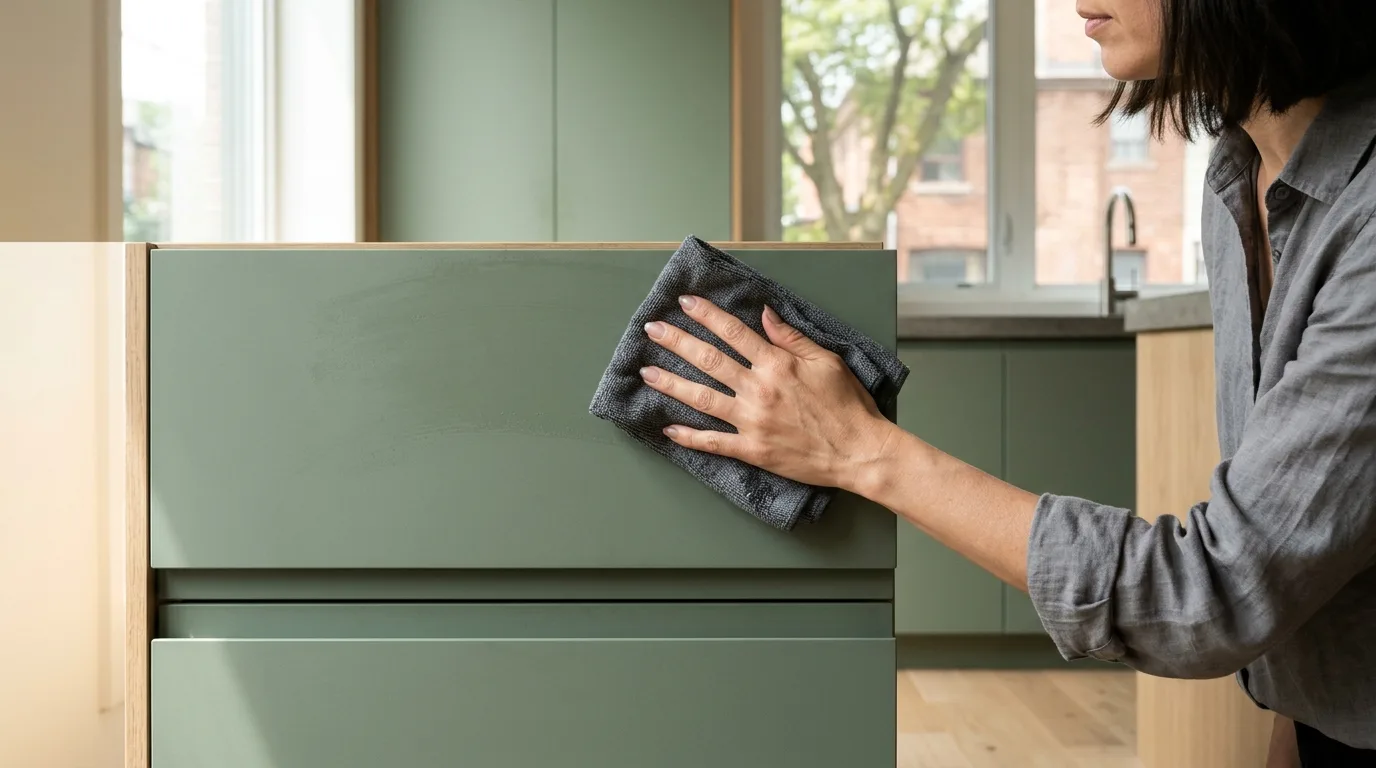
Direct answer. To clean super matte cabinets, wipe them with a soft cloth dampened in warm water and a drop of plain dish soap, then wipe again with a clean cloth and plain warm water, and dry with a paper towel or a fresh microfibre cloth. Never dust them with a dry cloth, and never use furniture polish, wax, oil soap or moisturising dish soap. Dry wiping is what charges the surface with static and pulls dust straight back on.
Soft-touch fronts are one of the most requested finishes in Toronto kitchens right now: velvety, low-glare and resistant to fingerprints. They are also the finish we get the most care questions about after handover. The usual complaint is the same: "I wiped it and now it looks worse." This guide explains why that happens and the routine that keeps the finish looking new.
What "soft-touch" and "super matte" actually mean
Several different materials are sold under these names, and it helps to know which one you have, because the care is slightly different:
- Super matte laminate such as FENIX NTM: a hard, non-porous laminate with a very low sheen. Micro-scratches on it can often be repaired at home.
- Lacquered MDF boards such as EGGER PerfectSense Matt: MDF with a factory-cured matt lacquer and an anti-fingerprint finish.
- Super matte PET or acrylic doors: a matt film bonded to MDF, common on handleless European-style kitchens.
- Site- or shop-painted matte lacquer on MDF: a sprayed paint finish, softer than the factory finishes above.
Your cabinet maker or the paperwork from your kitchen should tell you which one you have. If you do not know, follow the gentle routine below; it is safe for all four.
Why super matte cabinets get static and streaks
A matte finish is not perfectly smooth. Under magnification it is a fine texture that scatters light, which is why it looks soft and hides fingerprints. Two things go wrong when people clean it the way they clean gloss:
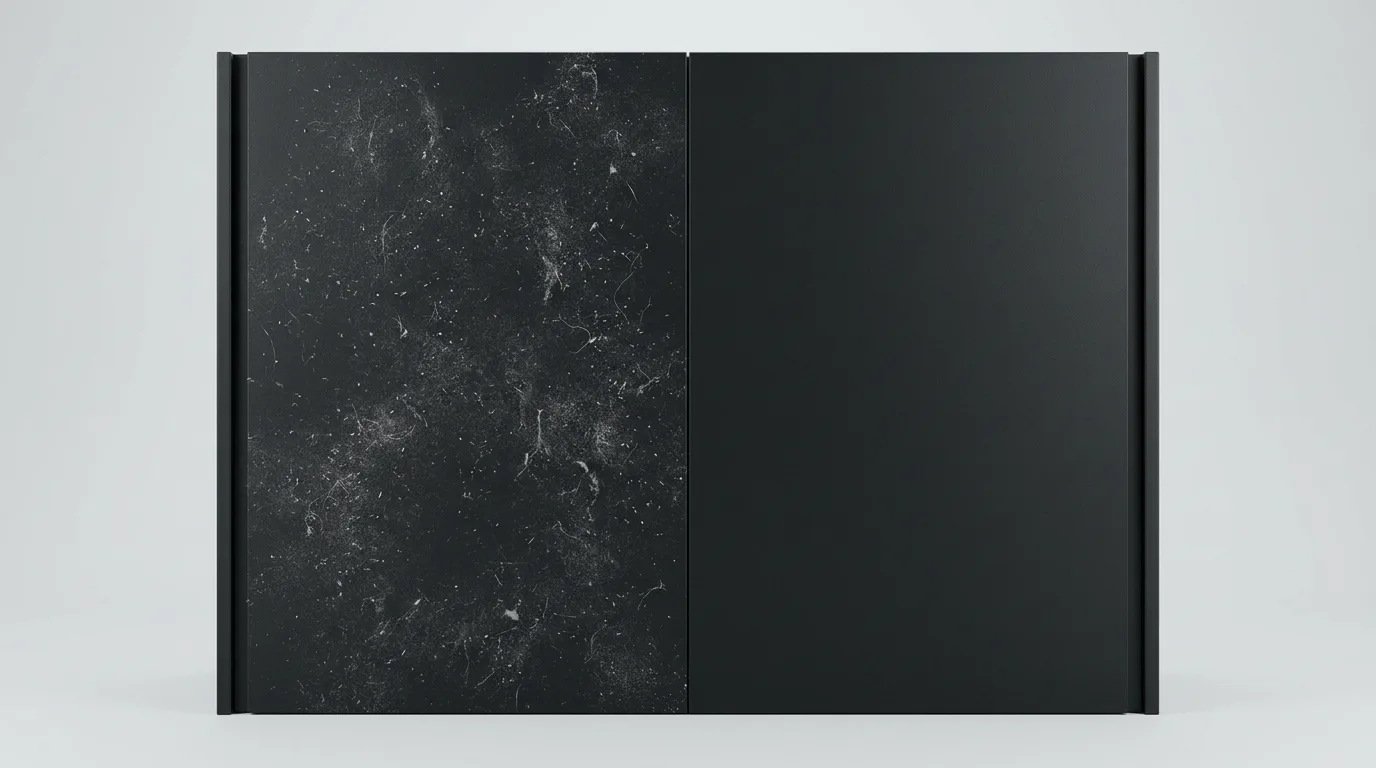
- Static. Rubbing a dry cloth over a plastic or lacquered surface builds up a static charge, and a charged door attracts dust and lint from the air within minutes. Toronto makes this worse: in winter, with the furnace running, indoor humidity often drops below 30%, and dry air lets static build up faster. Wiping with a damp cloth discharges the surface instead of charging it.
- Streaks and shiny patches. Soap or cleaner left in the texture dries as a film that shows as streaks or cloudy patches. Products that leave oils or wax behind (furniture polish, oil soap, "shine" sprays, dish soap with added moisturiser) fill the texture and leave a sticky layer. EGGER warns that these build up a dirt-binding layer and cancel the anti-fingerprint effect. Scrubbing hard in one spot can also polish the matte texture into a shiny patch that does not come back.
How to clean super matte cabinets: the routine
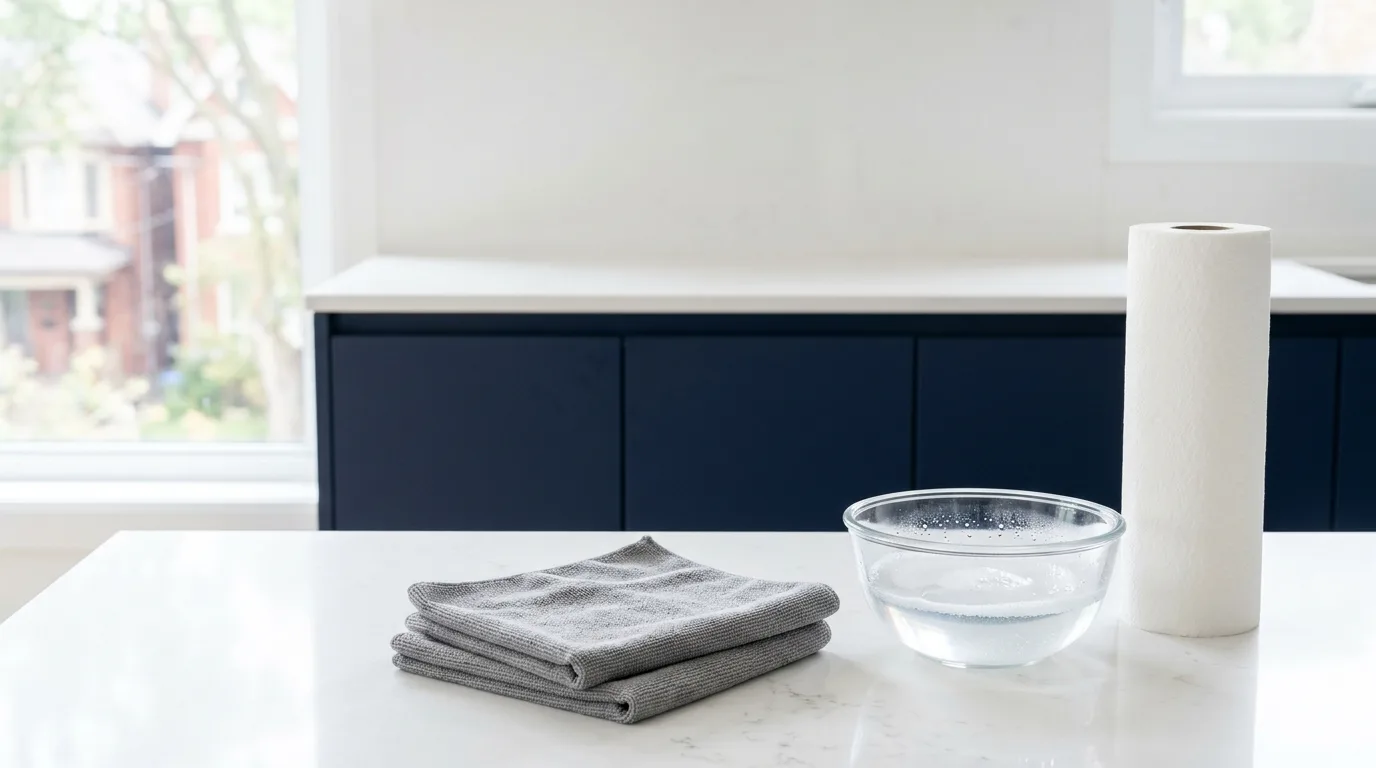
- Use two soft cloths. A fine, non-abrasive microfibre or cotton cloth for washing, and a second clean one for rinsing. Keep a roll of paper towel for drying.
- Mix a mild solution. Warm water (not hot) with a few drops of plain dish soap, the basic kind without hand cream or lotion. A glass cleaner without ammonia also works on most factory finishes.
- Wring the cloth well. It should be damp, not wet. Water running into the edges and hinge holes is a bigger risk than dirt.
- Wipe gently, in one direction. Light pressure, top to bottom, across the whole door rather than scrubbing one spot.
- Rinse. Wipe the door again with the second cloth dampened in plain warm water. This is the step most people skip, and it is the one that prevents streaks.
- Dry straight away. Pat or wipe dry with paper towel or a fresh microfibre cloth. Leaving drops to air-dry causes water marks, especially with Toronto's hard tap water.
For everyday dust, skip the soap: a cloth dampened with plain water and then a dry paper towel is enough. The key is that the first contact is damp, never dry.
Grease, fingerprints and tougher marks
- Cooking grease near the range: clean it within a day or two. EGGER recommends removing grease within 48 hours, before it hardens. A slightly stronger dish-soap solution, a little longer contact, then rinse and dry.
- Fingerprints around handles or push-to-open points: plain warm water and a dry wipe usually removes them. If they keep coming back in the same spot, an old polish or cleaner residue is often the cause; washing the whole door with soap and rinsing well fixes it.
- Dedicated cleaners: both FENIX and EGGER sell cleaners for their matte surfaces. They are worth having for stubborn marks, but they are not needed for routine cleaning.
What never to use on super matte cabinets
- Furniture polish, wax, oil soap or any "shine" or "protect" spray
- Dish soap with moisturiser or hand cream, which leaves a greasy film
- Abrasive powders and creams, scouring pads, the rough side of a sponge, steel wool
- Strong acids and alkalis: descalers, oven cleaner, drain cleaner, bleach-heavy sprays
- Steam cleaners, which push heat and moisture into edges and joints
- Dry dusting cloths and feather dusters, which charge the surface with static
Solvents such as acetone are a special case. Some laminates tolerate them for spot cleaning, but lacquered and painted fronts may not. Test anything stronger than soap on the inside of a door first.
Can you fix scratches on matte cabinets?
It depends on the material. FENIX NTM is designed to be repaired: according to the manufacturer's care instructions, light micro-scratches can be rubbed out with a melamine "magic" sponge, or healed by placing a damp sheet of kitchen roll over the mark and pressing a hot iron on it for no more than 10 seconds at a time. Do not try either method on other finishes. On lacquered, film-wrapped or painted doors, a melamine sponge is mildly abrasive and will leave a shiny patch, and heat can blister the surface. For those, a deep scratch or chip is a repair for a refinisher, or the door is replaced.
EGGER publishes its own cleaning and care instructions for PerfectSense boards, and the advice in this guide follows both manufacturers.
Is a super matte kitchen worth it?
Yes, for most households, as long as you know the routine. Super matte fronts hide fingerprints far better than gloss, they do not show the glare of pot lights, and the better ones are as durable as standard laminate. The trade-off is that they do not forgive the wrong cleaner. If you have young children or want a finish you can scrub, a textured laminate or a painted shaker door may suit you better. Our kitchen cabinet materials guide compares the options, and our 2027 cabinet and countertop combinations shows how matte fronts pair with stone.
Frequently asked questions
Why do my matte cabinets look streaky after cleaning?
Almost always it is cleaner left on the surface. Wipe the doors again with a cloth dampened in plain warm water, then dry them straight away with paper towel.
How do I stop dust sticking to my matte cabinets?
Stop dusting them dry. Use a slightly damp cloth, which removes the static charge instead of building it. In winter, keeping indoor humidity around 35% to 45% with a humidifier also reduces static throughout the house.
Can I use a magic eraser on super matte cabinets?
Only on FENIX NTM and similar repairable laminates, where the manufacturer recommends it. On lacquered, PET, acrylic or painted fronts it can polish the finish and leave a shiny spot.
Are Lysol or disinfecting wipes safe?
For an occasional wipe they are usually fine on factory laminate, but many contain alcohol and fragrance oils that can leave residue. Rinse with plain water and dry afterwards, and do not use them as your everyday cleaner.
Need new doors or a matte kitchen?
We build kitchens with matte and soft-touch fronts on Blum hardware across Toronto and the GTA, and we are happy to walk you through the care for the finish you choose. See our kitchens or book a free consultation.