

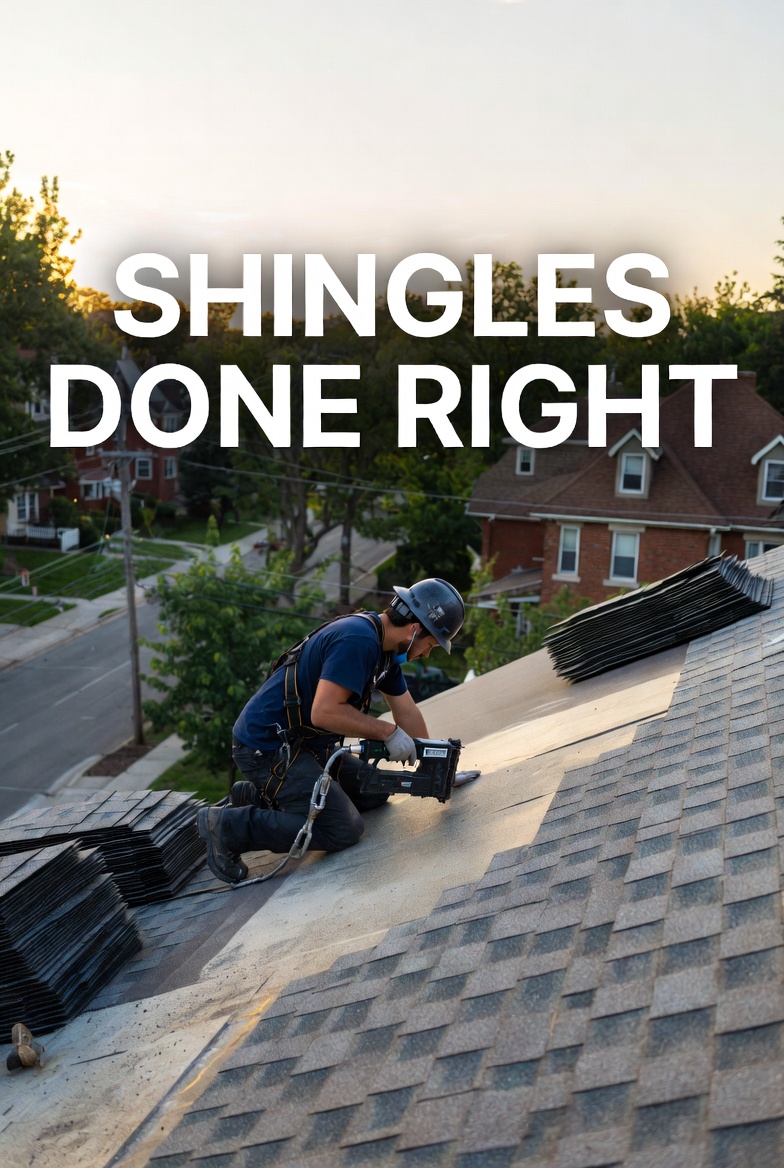
Direct answer. Roofing replacement in Toronto in 2026 costs $4.50 – $14+ per square foot installed depending on material. Asphalt shingles run $4.50 – $7.50/sq ft; standing-seam metal $11 – $18/sq ft; cedar shake $14 – $22/sq ft. A typical 1,800 sq ft Toronto home roof replacement runs $9,000 – $35,000 fully installed.
Key Takeaways
- Asphalt shingle replacement: $4.50 – $7.50 per sq ft (most common, 20–25 year lifespan in Toronto).
- Premium architectural shingles: $6 – $9/sq ft (50-year warranty options available).
- Standing-seam metal: $11 – $18/sq ft — 50+ year lifespan, lightweight, premium aesthetic.
- Cedar shake: $14 – $22/sq ft — heritage homes, 25–30 year lifespan, periodic treatment required.
- Ice-and-water shield + ridge ventilation are non-negotiable in Toronto — without them, ice damming destroys the roof early.
Why Country Renovations. Building Toronto and GTA renovations since 2014. HCRA-registered, licensed plumbing & electrical trades, WSIB-cleared, $5M general liability insured. Free written fixed-price quote in 5 business days. Book a free site visit →
As Toronto homeowners enter 2026, understanding roofing replacement cost Toronto projections has become more critical than ever. With material prices stabilizing after several years of volatility and new energy efficiency requirements coming into effect, making informed decisions about your roof replacement project requires up-to-date, accurate information.
Whether you’re dealing with storm damage, aging shingles, or planning a comprehensive home renovation, this guide provides Toronto and GTA homeowners with everything you need to know about the average roofing replacement cost Toronto homeowners can expect in 2026, including materials, labour, permits and financing.
Current Market Overview for Toronto Roofing in 2026
The Greater Toronto Area roofing market has evolved significantly since the supply chain disruptions of the early 2020s. In 2026, homeowners can expect more predictable pricing, though the typical roofing replacement cost Toronto projects remain elevated compared to pre-2020 levels due to increased material quality standards and enhanced building code requirements.
Key market factors affecting pricing include:
- Material costs: Stabilized but 15–20% higher than 2019 levels
- Labour availability: Improved compared to 2022–2023 shortage periods
- Building code updates: New energy efficiency requirements effective January 2026
- Insurance requirements: Stricter standards for wind and hail resistance
- Permit processing: Streamlined digital processes reducing timeline delays
The Ontario Building Code amendments that took effect in January 2026 now require enhanced insulation standards and improved ventilation systems for all roof replacements, impacting both material selection and the final roofing replacement cost Toronto homeowners pay. For the official rules, see the Ontario Building Code.
Average Roofing Replacement Cost Toronto Homeowners Pay in 2026
Asphalt Shingles
Asphalt shingles remain the most popular choice for Toronto homeowners, offering the best balance of cost, durability, and aesthetic appeal — and the lowest roofing replacement cost Toronto option in 2026.
- 3-Tab Asphalt Shingles: $8,500 – $12,000 — suitable for budget-conscious homeowners and rental properties; lifespan 15–20 years.
- Architectural Shingles: $11,000 – $16,500 — the most popular choice across Toronto and the GTA; lifespan 25–30 years with enhanced curb appeal and wind resistance.
- Premium / Designer Shingles: $14,000 – $22,000 — high-end aesthetic options with 30–35 year lifespan and superior weather warranties.
Metal Roofing
Metal roofing has gained popularity in the GTA due to its longevity and energy efficiency benefits, even though the upfront roofing replacement cost Toronto homeowners pay is higher than asphalt.
- Steel Roofing: $16,000 – $25,000 — excellent durability; 40–50 year lifespan; available in various colours and profiles.
- Aluminum Roofing: $18,000 – $28,000 — corrosion-resistant and ideal for Toronto’s climate; lightweight option for older homes.
- Premium Metal Systems: $22,000 – $35,000 — standing seam, copper, or specialty alloys with 50+ year lifespan.
Cedar Shake and Slate
- Cedar Shake: $20,000 – $30,000 — natural wood aesthetic highly valued in Toronto’s established neighborhoods; lifespan 25–35 years with proper care.
- Natural Slate: $25,000 – $45,000 — premium option for heritage homes; lifespan of 75–100 years with specialized installation.
All prices are based on a typical 2,000–2,500 sq ft Toronto home and include materials, labour, permits and waste disposal.
Factors Affecting Roofing Replacement Cost in Toronto
Roof Size and Complexity
Roof square footage is the single biggest driver of the final roofing replacement cost Toronto homeowners receive in their estimate:
- Simple gable roof: $4.50 – $8.50 per sq ft
- Complex roof with multiple angles: $6.50 – $12.00 per sq ft
- Mansard or specialty designs: $8.00 – $15.00 per sq ft
Roof Pitch and Accessibility
Steeper roofs common in Toronto’s older neighborhoods require additional safety equipment and specialized techniques:
- Standard pitch (4/12 to 6/12): standard pricing
- Steep pitch (8/12+): add 15–25% to base cost
- Limited-access properties: add 10–20% for equipment positioning
Geographic Location Within the GTA
The roofing replacement cost Toronto households face can vary by location within the Greater Toronto Area:
- Toronto Core (Downtown, Midtown): premium pricing due to access challenges and permit requirements.
- North York & Etobicoke: standard GTA pricing with good contractor availability.
- Scarborough: competitive pricing with excellent access.
- Markham, Richmond Hill, Vaughan: standard to slightly elevated pricing.
- Mississauga & Brampton: competitive pricing and high contractor availability.
- Oakville: premium pricing reflecting higher-end market expectations.
Structural Considerations
Many Toronto homes built before 1980 require deck work that can add to the overall roofing replacement cost Toronto homeowners encounter:
- Partial deck replacement: add $3.50 – $5.50 per sq ft
- Complete deck replacement: add $4.50 – $7.00 per sq ft
- Structural reinforcement: $2,000 – $8,000 depending on extent
The new 2026 building code mandates R-60 minimum attic insulation, enhanced ridge and soffit ventilation, and vapour barrier upgrades — adding $2,500 – $6,000 for typical homes.
Permit Requirements and Costs
City of Toronto Permits
All roof replacements in Toronto require permits. The 2026 streamlined process includes:
- Permit fees: $156 – $312 depending on home value
- Processing time: 3–5 business days for standard applications
- Required documentation: architectural drawings, structural engineer reports if load changes occur, and energy compliance documentation
You can review permit details on the City of Toronto building permit page.
Building Code Compliance
The Ontario Building Code updates effective in 2026 require minimum R-60 insulation, a 1:150 ratio for net free ventilation area, a Class A wind-resistance rating for all materials, and enhanced fire-resistance requirements for multi-unit properties. Non-compliance can result in failed inspections and costly remediation.
Seasonal Pricing and Timing Considerations
Best Times for Roof Replacement in Toronto
- Spring (April–May): good weather, contractor availability increasing — book early; standard rates.
- Summer (June–August): optimal weather conditions and full contractor availability — but expect a 5–10% peak-season premium.
- Fall (September–November): the best value season — good weather and competitive pricing.
- Winter (December–March): the lowest roofing replacement cost Toronto homeowners can secure (10–15% discount), but weather delays are possible.
Weather-Related Considerations
Toronto’s climate presents specific challenges: snow load requirements, ice dam prevention, a minimum 130 mph wind rating, and materials that can handle extreme thermal cycling.
Financing Options for Toronto Homeowners
Traditional Financing
- Home Equity Line of Credit (HELOC): typically the lowest interest rates (Prime + 0.5% to 2%) with flexible repayment terms.
- Personal Loans: quick approval with fixed payment terms; rates vary 6–12% depending on credit score.
Government Incentives and Rebates
- Canada Greener Homes Grant: up to $5,000 for energy efficiency improvements (requires an EnerGuide evaluation). See the official Greener Homes Grant page.
- Ontario Home Energy Rebate Program: additional provincial incentives for qualifying upgrades.
- Municipal programs: some GTA cities offer property tax deferrals for seniors and low-interest improvement loans.
Contractor Financing Programs
Many established contractors, including Country Renovations, offer 0% financing for qualified applicants, extended payment plans and seasonal payment deferral options.
Choosing the Right Contractor in the GTA
Essential Contractor Qualifications
- WSIB coverage and a minimum $2 million liability insurance policy
- City of Toronto business license and a strong Better Business Bureau rating
- Minimum 10 years of Toronto-area experience and specialized training in the chosen materials
- Documented knowledge of local building codes and a portfolio of similar projects
Red Flags to Avoid
Door-to-door sales, requests for full payment upfront and unusually low bids are classic warning signs. Bids well below the typical roofing replacement cost Toronto market range often indicate inferior materials, unlicensed workers or inadequate insurance — and frequently lead to costly overruns.
Getting Accurate Quotes
Comprehensive written estimates should include material specifications and quantities, labour costs broken down by task, permit and disposal fees, a clear timeline and warranty terms. Always obtain three to four quotes from established contractors and compare total project scope rather than price alone.
Energy Efficiency and Environmental Considerations
2026 Energy Code Updates
New 2026 requirements focus on enhanced thermal performance, improved air sealing across the building envelope, and solar-ready provisions for new construction and major renovations.
Cool Roofing Benefits
Cool roofing materials offer 10–15% reductions in cooling costs, help reduce the urban heat island effect, extend material life by limiting thermal cycling, and qualify for additional utility rebates in some programs.
Solar Integration Considerations
Many Toronto homeowners now combine roof replacement with solar installation. Key items to plan for include a structural assessment, electrical panel upgrades, Ontario’s net metering program, and combined financing that often improves payback. Pairing solar with a new roof can offset part of your roofing replacement cost Toronto investment over time.
Maintenance and Warranty Considerations
Typical Warranty Coverage
- Asphalt shingles: 25–50 year manufacturer warranty
- Metal roofing: 30–50 year material warranty
- Premium materials: lifetime warranties available
- Labour warranties: 2–5 years standard; 5–10 years with established contractors; up to 25 years with premium installers
Maintenance Requirements
Toronto’s climate requires regular maintenance: a spring inspection after ice and snow damage, fall preparation for winter weather, post-storm damage assessment, plus gutter cleaning. Budget roughly $200–$400 for annual inspections, $300–$800 for minor repairs, and $150–$300 twice a year for gutter maintenance.
Frequently Asked Questions
How long does a roof replacement take in Toronto?
Most residential projects take 2–5 days. Simple roofs (1,500–2,000 sq ft) finish in 2–3 days, complex roofs in 4–7 days, and weather can extend the schedule. The full process from contract to completion — including the 3–5 day permit window and material delivery — typically takes 2–3 weeks.
Is it worth upgrading to premium materials?
Premium materials usually deliver strong long-term value: longer lifespan, better warranties, lower energy costs and improved resale value. The break-even point for premium materials typically occurs within 12–18 years, making them worthwhile if you plan to stay long-term.
Do I need permits for roof replacement in all GTA municipalities?
Yes — Toronto, Mississauga, Brampton, Markham, Richmond Hill, Vaughan and Oakville all require building permits. Skipping permits can lead to stop-work orders, costly compliance work, insurance claim issues and resale complications requiring retroactive permits.
How do I prepare my home for roof replacement?
Remove valuables from the attic, cover belongings on upper floors, trim overhanging branches, ensure clear equipment access, notify neighbours, and arrange time off for project oversight and pet care during noisy work periods.
What happens if weather delays my roofing project?
Reputable contractors apply temporary weatherproofing, communicate revised timelines and absorb weather-delay costs themselves. Rain, snow, high winds and extreme cold can all pause work for safety and quality reasons.
How can I tell if I need full replacement versus repairs?
Replacement usually wins when shingles are over 20 years old with multiple issues, when more than 30% of the roof has missing or damaged shingles, when there are multiple leak locations or sagging deck areas, or when repair costs exceed 40% of replacement cost.
Conclusion
Roofing replacement is a major investment, but understanding current market conditions makes the roofing replacement cost Toronto homeowners face far easier to plan for. In 2026 you can expect stabilized pricing, improved contractor availability and stricter building code requirements that improve long-term performance.
Key takeaways for your project:
- Budget appropriately: plan for $11,000–$25,000 for most Toronto homes
- Choose quality contractors: experience and proper licensing are essential
- Consider timing: fall offers the best value, while summer ensures optimal weather
- Plan for code compliance: new 2026 requirements affect every replacement
- Evaluate long-term benefits: premium materials often provide superior value
Whether you’re located in downtown Toronto, Scarborough, Markham, Richmond Hill, Vaughan, Mississauga, Brampton, Oakville, North York or Etobicoke, working with an experienced local contractor ensures your project meets all requirements while delivering lasting value.
For related planning resources, see our guide to open concept kitchen renovation in Toronto and our other 2026 cost guides.
Contact Country Renovations for a free estimate and discover how our decade of Toronto-area experience can ensure your roofing project exceeds expectations while staying within budget. Our team understands local requirements, weather challenges and quality standards that make the difference between a good roof and a great one.


Leave a Reply
You must be logged in to post a comment.